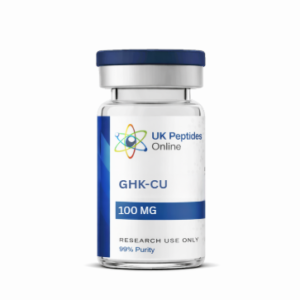
GHK-CU 50mg × 10 vials
$35.00
GHK-Cu 50mg peptide × 10 vials for tissue repair and skin regeneration studies.
GHK-Cu UK Peptides (50mg) Benefits & Research Uses
The GHK-Cu UK peptides (50mg) format is one of the most widely researched copper peptide compounds in the fields of skin regeneration, cellular repair, and tissue remodelling science. Known scientifically as Copper Tripeptide-1, GHK-Cu has been studied for decades due to its strong biological activity in collagen production, wound healing models, and anti-aging research.
At UK Peptides Online, GHK-Cu is supplied strictly for laboratory and scientific research purposes only.
What Is GHK-Cu?
GHK-Cu (glycyl-L-histidyl-L-lysine copper complex) is a naturally occurring tripeptide bound to a copper ion (Cu²⁺). It was first identified in human plasma and has since been extensively studied for its role in tissue repair and biological signalling.
To understand its structure, you can learn more about amino acids, the fundamental building blocks of peptides and proteins.
In research environments, GHK-Cu is commonly associated with:
- Skin regeneration studies
- Wound healing models
- Collagen synthesis research
- Anti-inflammatory pathways
- Tissue remodelling processes
- Hair follicle biology studies
Mechanism of Action: How GHK-Cu Works
GHK-Cu functions as a biological signalling molecule, interacting with cells to regulate repair and regeneration pathways.
In laboratory studies, it is observed to influence:
- Collagen and elastin production
- Glycosaminoglycan synthesis
- Stem cell activation pathways
- Angiogenesis (blood vessel formation)
- Antioxidant defence systems
These mechanisms make it a major focus in regenerative and cosmetic research models.
Key Research Benefits of GHK-Cu UK Peptides (50mg)
1. Collagen and Skin Structure Support
GHK-Cu is widely studied for its role in stimulating:
- Collagen synthesis
- Elastin production
- Skin matrix remodelling
- Dermal thickness improvements in models
This makes it highly relevant in skin regeneration research.
2. Wound Healing and Tissue Repair Research
GHK-Cu is frequently used in studies involving:
- Skin injury models
- Tissue regeneration pathways
- Cellular proliferation research
- Scar formation modulation
It is also associated with improved angiogenesis in experimental systems.
3. Anti-Aging and Cellular Rejuvenation Studies
Research explores how GHK-Cu may influence:
- Oxidative stress reduction pathways
- Cellular longevity mechanisms
- Skin elasticity models
- Extracellular matrix regeneration
4. Hair Follicle and Growth Research
GHK-Cu is commonly studied in hair biology models involving:
- Follicle stimulation pathways
- Hair cycle (anagen phase) regulation
- Scalp tissue regeneration
- Follicular blood flow improvement models
5. Anti-Inflammatory and Antioxidant Effects
Copper peptides are widely researched for:
- Inflammation modulation
- Free radical reduction pathways
- UV-related cellular damage models
- Tissue protection mechanisms
How GHK-Cu Works in Research Models
GHK-Cu interacts with biological systems at a cellular level by regulating gene expression linked to repair and regeneration.
Research-Based Mechanisms
- Enhances extracellular matrix protein production
- Modulates inflammatory signalling pathways
- Supports angiogenesis and blood vessel formation
- Influences collagen remodelling activity
- Regulates oxidative stress responses
These effects are observed in controlled laboratory environments.
GHK-Cu 50mg × 10 Vials Overview
The GHK-Cu UK peptides 50mg × 10 vials format is designed for research consistency and long-term laboratory use.
Specifications
- Peptide: GHK-Cu (Copper Tripeptide-1)
- Form: Lyophilised (freeze-dried powder)
- Concentration: 50mg per vial
- Quantity: 10 vials per pack
- Purity: ≥98% (HPLC tested)
- Storage: 2–8°C after reconstitution
Research Use and Handling Guidelines
GHK-Cu is supplied strictly for laboratory research use.
Reconstitution (Research Practice)
In controlled environments, GHK-Cu is typically reconstituted using bacteriostatic water depending on experimental design requirements.
Handling Guidelines
- Use sterile laboratory techniques
- Avoid contamination during preparation
- Follow measured dosing protocols for research accuracy
- Maintain controlled storage conditions
Storage Instructions
To maintain peptide stability and research integrity:
- Store lyophilised vials in a cool, dry place
- Refrigerate after reconstitution (2–8°C)
- Avoid direct sunlight and heat exposure
- Do not freeze once mixed
- Use within recommended laboratory stability window
Research Applications of GHK-Cu UK Peptides
GHK-Cu is widely used in scientific studies involving:
- Dermatological research
- Wound healing models
- Cosmetic formulation testing
- Hair growth biology studies
- Anti-aging mechanism research
- Tissue regeneration experiments
Combining GHK-Cu with Other Research Peptides
GHK-Cu is often studied alongside other peptides to explore synergistic regenerative effects.
Common research combinations include:
- BPC-157 – tissue repair and healing pathways
- TB-500 – cell migration and regeneration
- Argireline – wrinkle and muscle relaxation research
- Matrixyl – collagen and skin structure support
These combinations are used to explore broader regenerative and cosmetic biology mechanisms.
Who Uses GHK-Cu in Research?
GHK-Cu is commonly used by:
- Biomedical researchers
- Cosmetic formulation laboratories
- Dermatology research teams
- Biotechnology developers
- Academic institutions
Its versatility makes it one of the most studied copper peptides in regenerative science.
UK Peptides Research Context
Researchers sourcing GHK-Cu UK peptides (50mg) typically prioritise:
- Verified purity and consistency
- Reliable batch quality
- Secure and stable supply chains
- Laboratory-grade standards
You can explore more research compounds here:
Related Research Resources
Conclusion
The GHK-Cu UK peptides (50mg) remain one of the most extensively studied copper peptides in regenerative science. Their role in collagen synthesis, skin repair, hair growth research, and anti-aging models makes them a cornerstone compound in modern peptide research.
As scientific interest continues to grow, GHK-Cu remains a key focus in dermatological, cosmetic, and cellular regeneration studies.
Disclaimer: All products are strictly for laboratory and research purposes only. Not for human consumption, diagnosis, or medical treatment.