
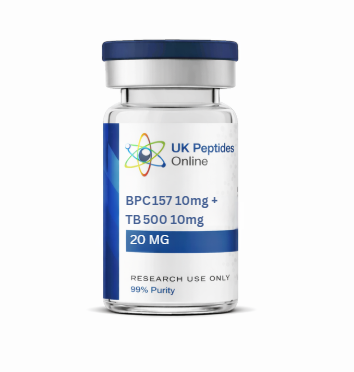
BPC 157 10mg + TB 500 10mg | 20mg × 10 Vial
$170.00
Buy BPC‑157 + TB‑500 (10mg each) 20mg × 10 vials online. Maximum peptide synergy for rigorous recovery studies.
UK Peptides BPC-157 10mg + TB-500 10mg (20mg)
The UK peptides BPC-157 10mg + TB-500 10mg peptide combination is one of the most widely studied regenerative research stacks in peptide science. Within UK peptide research communities, this pairing is frequently explored for its potential role in tissue regeneration, inflammation response, and cellular repair mechanisms in controlled laboratory environments.
At UK Peptides Online, this combination is supplied strictly for laboratory and scientific research purposes only.
What Is BPC-157?
BPC-157 (Body Protection Compound-157) is a synthetic peptide derived from a naturally occurring protein found in gastric tissue. It consists of 15 amino acids and has been widely studied in preclinical research for its biological repair and protective signalling properties.
To better understand its structure, you can learn more about amino acids, the fundamental building blocks of peptides.
In research environments, BPC-157 is commonly associated with:
- Tendon and ligament repair models
- Muscle regeneration studies
- Gut and gastrointestinal system research
- Inflammation pathway analysis
- Cellular repair mechanisms
What Is TB-500?
TB-500 (Thymosin Beta-4) is a synthetic version of a naturally occurring peptide involved in cell structure and repair processes. It is widely researched for its role in cell migration and tissue regeneration.
In laboratory studies, TB-500 is commonly associated with:
- Cell migration research
- Angiogenesis (blood vessel formation)
- Muscle and tissue repair models
- Anti-inflammatory response studies
- Structural regeneration pathways
Why Combine BPC-157 10mg + TB-500 10mg?
The BPC-157 + TB-500 UK peptides stack is studied for its potential synergistic effects in regenerative research models.
Synergistic Research Interest
- BPC-157 is often associated with localized tissue repair and gut-related pathways
- TB-500 is commonly studied for systemic cell migration and structural recovery processes
Together, researchers examine how these peptides may interact across multiple biological systems involved in repair and recovery.
Key Benefits of BPC-157 + TB-500 (Research Focus)
1. Accelerated Tissue Regeneration
This combination is widely studied in models involving:
- Muscle repair
- Tendon recovery
- Ligament regeneration
- Connective tissue repair
2. Inflammation Reduction Research
Both peptides are individually studied for their effects on inflammatory pathways.
Research focuses include:
- Swelling response models
- Cellular inflammation regulation
- Tissue stress recovery
- Repair signalling modulation
3. Gut and Systemic Protection (BPC-157 Focus)
BPC-157 is frequently studied in:
- Gut lining integrity research
- Gastrointestinal protection models
- Systemic healing pathway studies
- Cellular digestive system repair
4. Angiogenesis and Circulation (TB-500 Focus)
TB-500 is widely examined for its role in:
- New blood vessel formation
- Improved tissue oxygenation models
- Nutrient delivery pathways
- Cellular repair circulation systems
5. Improved Mobility and Flexibility Models
Research explores how this combination may influence:
- Tissue elasticity
- Joint movement systems
- Structural recovery responses
- Cellular flexibility mechanisms
How the Combination Works in Research Models
BPC-157 Mechanisms (Research-Based)
- Supports collagen-related repair pathways
- Studied in nitric oxide signalling systems
- May influence angiogenesis models
- Associated with cellular repair mechanisms
TB-500 Mechanisms (Research-Based)
- Regulates actin within cells
- Supports cell migration processes
- Enhances tissue regeneration signalling
- Studied in inflammation response pathways
Combined Mechanism (Research Focus)
When studied together, researchers investigate:
- Enhanced tissue regeneration responses
- Improved cellular repair coordination
- Reduced inflammation signalling
- Increased structural recovery efficiency
Usage Guidelines (Research Purposes Only)
The BPC-157 10mg + TB-500 10mg blend is supplied as a lyophilised powder for laboratory use.
Reconstitution (Research Practice)
In controlled laboratory environments, peptides are typically reconstituted using bacteriostatic water depending on study design requirements.
Handling Methods
Common research approaches may include:
- Subcutaneous administration in experimental models
- Localised application near injury models
- Systemic research protocols in preclinical studies
Only trained professionals should handle peptide compounds in controlled environments.
Storage Instructions
To maintain peptide stability and research integrity:
- Store lyophilised vials in a cool, dry place
- Refrigerate after reconstitution
- Avoid heat and direct sunlight
- Do not freeze once mixed
- Keep securely stored away from children and unauthorized access
Possible Observations in Research Models
In laboratory settings, researchers may observe:
- Mild localised irritation in application models
- Temporary fatigue in test subjects
- Minor transient physiological responses
- Variable outcomes depending on study design
All outcomes depend on experimental conditions.
Who Uses BPC-157 + TB-500 10mg?
This peptide combination is commonly used in:
- Regenerative medicine research (preclinical)
- Musculoskeletal injury models
- Tissue repair and recovery studies
- Inflammation pathway analysis
- Cellular regeneration experiments
Its versatility makes it one of the most widely referenced peptide combinations in experimental biology.
UK Peptides Research Context
Researchers sourcing BPC-157 + TB-500 UK peptides typically prioritise:
- Batch consistency
- Verified purity standards
- Reliable supply chains
- Laboratory-grade materials
You can explore related compounds in the all peptides catalogue or browse the research peptide shop.
For ordering guidance, visit the how to order guide.
Related Research Resources
- High purity peptides supplier
- Peptide vial research
- Are peptides legal in the UK
- BPC-157 product page
Conclusion
The BPC-157 10mg + TB-500 10mg peptide combination remains one of the most widely researched regenerative stacks in peptide science. Its synergistic profile makes it a key focus in studies involving tissue repair, inflammation response, and cellular regeneration mechanisms.
As peptide research continues to evolve, this combination remains highly relevant in laboratory-based biological studies.
Disclaimer: All products are strictly for laboratory and research purposes only. Not for human consumption, diagnosis, or medical treatment.


